SIF SIP: Can You Do a Systematic Investment Plan in SIF? The Honest Answer
Can you invest in SIF through SIP? The honest answer - which SIF funds allow SIP, minimum amounts, how SIF SIP differs from MF SIP, tax implications, and whether SIP in SIF makes sense for HNI investors.
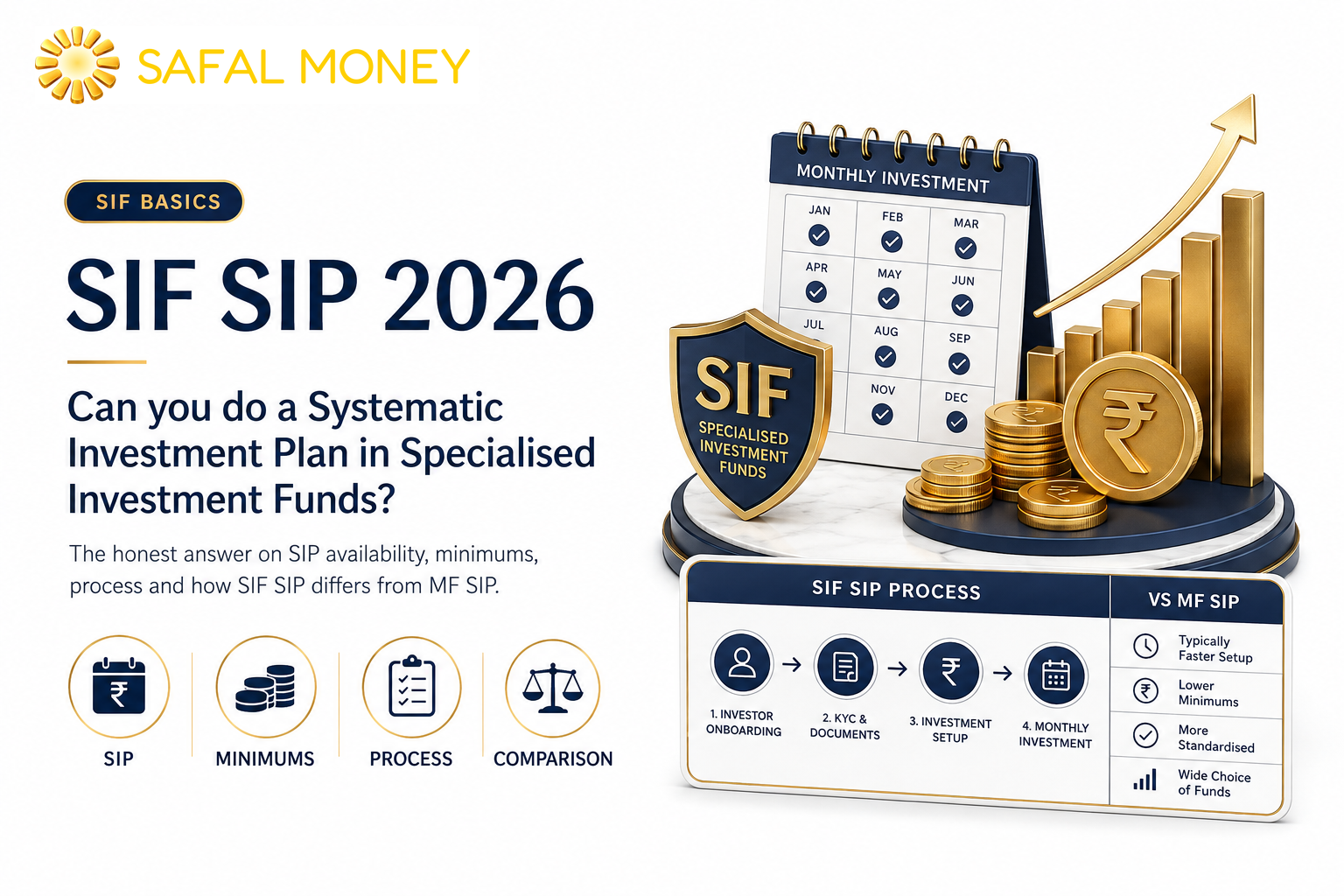
The first question most retail-trained investors ask when they discover SIF is: "Can I do a SIP in it?"
It is the right instinct — SIP is how most Indians have been taught to invest in equity, and for good reasons. Rupee-cost averaging, discipline, compounding, affordability. The SIP habit has created enormous wealth for millions of Indian mutual fund investors.
But SIF is not a conventional mutual fund. And the answer to the SIF SIP question is more nuanced than a simple yes or no. Some SIF funds allow SIP. The mechanics are different from conventional MF SIP. The minimum amounts are higher. The tax treatment per instalment has important implications. And — most importantly — whether SIP is even the right approach for SIF investment is a question worth examining honestly.
This article gives you the complete picture.
Can You Do SIP in SIF? The Direct Answer
Yes — several SIF funds allow SIP investments. But not all do, and those that do have specific conditions.
Based on the SIF funds reviewed in this series, here is the SIP availability and minimum SIP amounts:
| Fund | SIP Available? | Minimum SIP Amount |
|---|---|---|
| Edelweiss Altiva Hybrid Long-Short | Yes | ₹1,000 |
| SBI Magnum Hybrid Long-Short | Yes | ₹10,000 |
| Tata Titanium Equity Long-Short | Yes | ₹1,000 |
| Tata Titanium Hybrid Long-Short | Yes | ₹1,000 |
| 360 ONE DynaSIF Equity Long-Short | Yes | ₹20,000 |
| 360 ONE DynaSIF Active Asset Allocator | Yes | ₹20,000 |
| ICICI Prudential iSIF Hybrid Long-Short | Yes | Check ISID |
| Quant qSIF Equity Long-Short | Yes | ₹1,000 |
| Quant qSIF Hybrid Long-Short | Yes | ₹10,000 |
| Bandhan Arudha Equity Long-Short | Yes | ₹10,000 |
| Mirae Platinum Hybrid Long-Short | Yes | Check ISID |
| ITI Diviniti Equity Long-Short | Yes | ₹5,000 |
The SIP minimums range from ₹1,000 to ₹20,000 per instalment — significantly lower than the ₹10 lakh lumpsum minimum. This is an important structural feature: you can begin SIP in a SIF fund with as little as ₹1,000 per month, but your aggregate investment across all strategies from the same AMC must eventually reach ₹10 lakh.
The Aggregate ₹10 Lakh Condition
SEBI's ₹10 lakh minimum investment rule applies at the PAN level across all strategies from the same AMC. SIP instalments accumulate toward this minimum. However — and this is the critical point — some AMCs require you to have already crossed the ₹10 lakh aggregate threshold before starting a SIP. Others allow you to build to ₹10 lakh through SIP instalments. Always verify this with the specific AMC before starting a SIP.
How SIF SIP Differs From Conventional MF SIP
Understanding the differences prevents operational surprises:
Difference 1: Subscription frequency. Conventional MF SIPs process on any business day you choose — daily, weekly, monthly. SIF SIP instalments typically process on specific dates aligned with the fund's transaction processing schedule. Check the available SIP dates for each fund.
Difference 2: Redemption is still fortnightly. Even if your SIP instalment goes in monthly, redemption remains fortnightly. The SIP adds a layer of systematic investment on top of the fortnightly redemption structure — it does not change the redemption mechanism.
Difference 3: Each SIP instalment has its own holding period. For exit load and tax purposes, each SIP instalment is treated independently from the date it was invested. Your January 2026 instalment reaches the 12-month LTCG threshold in January 2027. Your July 2026 instalment reaches it in July 2027. FIFO (first-in-first-out) applies when redeeming — earliest instalments are redeemed first.
Difference 4: Accredited investor verification is one-time. Once you have your Accredited Investor Certificate and have completed the initial ₹10 lakh investment (or met the threshold through SIP accumulation), subsequent SIP instalments do not require re-verification. The accredited investor status is established once and applies to all subsequent investments.
Difference 5: SIP mandate setup. SIF SIP mandate setup may involve additional steps compared to conventional MF SIP — particularly for NRI investors who need NRE/NRO bank mandate setup through the specific AMC's NRI SIF process.
The Rupee-Cost Averaging Argument for SIF SIP
The traditional argument for SIP — that it smooths out entry prices through rupee-cost averaging — applies to SIF as it does to conventional mutual funds, with one important nuance.
In a conventional equity mutual fund, rupee-cost averaging works because:
- Markets are volatile — prices fluctuate significantly
- You buy more units when prices are lower and fewer when prices are higher
- Over time, your average cost is lower than the simple average of prices over the period
- This averaging benefit is most powerful during market downturns — when SIP investors buy more units at depressed prices
In a Hybrid Long-Short SIF, the same mechanism applies — but with lower NAV volatility than a pure equity fund. The short book provides partial downside cushioning during corrections, meaning the SIF's NAV fluctuates less than a comparable equity fund. Lower volatility means less dramatic price swings — which means the rupee-cost averaging benefit of SIP is smaller than for a volatile equity fund.
For aggressive Equity Long-Short SIF strategies — which carry higher NAV volatility closer to a pure equity fund — the rupee-cost averaging benefit of SIP is more meaningful.
The honest assessment: SIP in Hybrid Long-Short SIF generates less rupee-cost averaging benefit than SIP in mid cap or small cap funds because of lower volatility. However, the discipline of regular, systematic investment has behavioural benefits that persist regardless of volatility — preventing market-timing mistakes and maintaining consistent investment habits.
SIF SIP vs Lumpsum: Which Is Better?
This is the most important practical question for HNI investors considering SIF — and the answer depends on your financial situation.
When lumpsum is better: if you have the ₹10 lakh available as a lumpsum and the current market environment is favourable — or if you are in a phase when the SIF fund has recently corrected — a lumpsum investment immediately puts the full capital to work. In SIF specifically, the long-short strategy benefits from having the full portfolio deployed to capture alpha from both long and short positions simultaneously. Lumpsum is also operationally simpler — one investment, one transaction date, one holding period for LTCG purposes, one redemption record.
When SIF SIP is better: if you do not have ₹10 lakh available as a lumpsum today but are building toward it — SIP is the only practical pathway into SIF. Monthly SIP instalments accumulate toward the minimum threshold while establishing the investment habit. If you are uncertain about timing — markets are volatile, valuation signals are mixed, and you cannot confidently identify a better or worse entry point — SIP removes the timing decision entirely. If you are adding to an existing SIF investment — rather than making an initial investment — SIP is an excellent tool for systematic top-up without requiring market timing judgment.
For most HNI investors with the corpus available: SafalMoney's preference for the initial SIF investment is lumpsum — getting the full capital deployed in the long-short strategy from day one. For subsequent additions to the same fund, SIP is an excellent systematic top-up mechanism.
SIF SIP Tax Implications: The FIFO Complexity
The FIFO tax treatment of SIF SIP deserves careful attention — particularly for HNI investors managing large SIF portfolios across multiple instalments.
How FIFO works in SIF SIP: when you redeem from a SIF fund that you built through SIP, the first units redeemed are the first units purchased — the oldest SIP instalments. This means units from your first SIP instalment (oldest) are redeemed first; these are likely to be long-term (held 12+ months) if you have been SIPing for over a year, and taxed at 12.5% LTCG if held 12+ months (for equity-oriented SIF). Newer instalments (held under 12 months) would be redeemed later — at 20% STCG if redeemed within 12 months of that specific instalment.
The LTCG exemption planning opportunity: with SIP, you have multiple purchase dates — each generating a separate capital gain record. This creates a planning opportunity: by tracking which instalments have crossed the 12-month LTCG threshold, you can time partial redemptions to maximise use of the ₹1.25 lakh annual LTCG exemption.
For example, after 2 years of monthly SIP, you have 24 instalments — the first 12 of which have crossed 12 months. Redeeming gains from the first 12 instalments across two financial years (June of one year and July of the next) allows you to utilise two years of ₹1.25 lakh exemptions — potentially sheltering ₹2.5 lakh of LTCG from tax.
Always consult your chartered accountant for tax planning specific to your SIF SIP situation.
The Step-Up SIF SIP: Building to Maximum Allocation Systematically
For investors who want to reach a specific SIF allocation over time — rather than a single lumpsum — the Step-Up SIF SIP is the most structured approach.
How it works: start with a manageable SIP amount — say ₹25,000 per month. Commit to increasing this periodically as income grows. Over 3–5 years, the compounding of both returns and increasing contributions accelerates the portfolio-building pace.
Example — building ₹50 lakh SIF allocation over 4 years:
| Year | Monthly SIP | Annual Investment | Accumulated Corpus (approx. 12% return) |
|---|---|---|---|
| Year 1 | ₹50,000 | ₹6L | ₹6.4L |
| Year 2 | ₹60,000 | ₹7.2L | ₹15.4L |
| Year 3 | ₹75,000 | ₹9L | ₹27.4L |
| Year 4 | ₹90,000 | ₹10.8L | ₹42.9L + lumpsum top-up = ₹50L |
This illustrative calculation assumes consistent 12% return which cannot be guaranteed. It shows how a systematic, step-up approach can build a substantial SIF allocation over 4 years without requiring a large initial lumpsum.
SIF SIP for Different Investor Profiles
For the young accumulator (age 25–35, corpus below ₹25 lakh): SIF SIP is the most appropriate entry mechanism. Start with a monthly SIP of ₹10,000–₹25,000 in a Hybrid Long-Short SIF strategy. Build the corpus toward ₹10 lakh through consistent contributions. The SIP discipline establishes the investment habit and achieves rupee-cost averaging during the accumulation phase.
For the established HNI (age 35–50, corpus above ₹50 lakh): lumpsum for the initial SIF investment — deploy ₹10–₹25 lakh immediately based on SafalZenith recommendation. Then add SIP of ₹25,000–₹50,000 monthly as systematic top-up to grow the allocation over time.
For the pre-retiree (age 55–62, large corpus): SIF SIP is generally not the right structure at this stage. Any new SIF investment should be via lumpsum — because the investment horizon is shorter and building via SIP over 2–3 years before having meaningful corpus deployed is inefficient when only Hybrid Long-Short SIF is appropriate and you want the strategy deployed immediately.
How to Set Up a SIF SIP: The Practical Process
- Confirm the fund allows SIP and the SIP minimum. Check the specific fund's ISID or AMC website for SIP availability, minimum amount, and available SIP dates.
- Complete initial investment if not already done. If you have not yet crossed the ₹10 lakh aggregate threshold with this AMC, you may need to make an initial lumpsum first. Confirm the AMC's policy on whether SIP can be started before reaching the ₹10 lakh minimum.
- Register your bank mandate. SIF SIP requires a standing bank mandate — either through NACH (National Automated Clearing House) or e-mandate through net banking. This is set up during the SIP registration process.
- Set up the SIP through AMC portal or SafalMoney. Log in to the AMC's SIF platform or work with SafalMoney to register the SIP with your chosen amount, frequency, and start date.
- Track FIFO records for tax planning. Maintain a record of each SIP instalment date and amount. This is essential for tax planning when you eventually redeem — knowing which instalments have crossed the 12-month LTCG threshold.
Free, 2 minutes
Frequently Asked Questions
Can you do SIP in SIF funds in India?
Yes - most SIF funds available in India allow SIP investments. Minimum SIP amounts range from Rs 1,000 to Rs 20,000 per instalment depending on the fund. The Rs 10 lakh aggregate investment minimum (at PAN level per AMC) still applies - either through initial lumpsum or accumulated through SIP instalments, depending on the AMC's policy. SIF SIP works like conventional MF SIP in terms of automatic monthly deduction but uses fortnightly redemption windows rather than daily liquidity.
What is the minimum SIP amount for SIF funds?
Minimum SIP amounts vary by fund. Edelweiss Altiva Hybrid Long-Short and Tata Titanium strategies allow SIP from Rs 1,000. Quant qSIF and Bandhan Arudha allow SIP from Rs 10,000. 360 ONE DynaSIF strategies require a minimum of Rs 20,000 per SIP instalment. ITI Diviniti allows SIP from Rs 5,000. Always verify the current minimum with the AMC or through SafalMoney before initiating a SIF SIP.
Is SIF SIP better than lumpsum investment?
For investors who have the full Rs 10 lakh available, lumpsum is generally preferable for the initial SIF investment - it puts the full capital to work in the long-short strategy immediately, maximising the benefit of both long and short book deployment. SIP is better when building toward the Rs 10 lakh minimum over time, when adding systematically to an existing SIF allocation, or when market uncertainty makes timing a lumpsum psychologically difficult. For ongoing additions after the initial investment, a monthly SIP top-up is an excellent systematic accumulation mechanism.
How is SIF SIP taxed in India?
Each SIF SIP instalment is treated independently for tax purposes - each has its own purchase date, holding period, and cost basis. The FIFO method applies on redemption - earliest purchased units are deemed redeemed first. For equity-oriented SIF (65%+ equity), instalments held 12+ months qualify for LTCG at 12.5% on gains above Rs 1.25 lakh annual exemption. Instalments held under 12 months are taxed at 20% STCG. The multiple purchase dates created by SIP generate a tax planning opportunity - partial redemptions can be timed to utilise multiple years of the Rs 1.25 lakh LTCG exemption.
Can I top up my existing SIF investment through SIP?
Yes. If you already have a lumpsum SIF investment above Rs 10 lakh in a specific fund, you can add to it through regular SIP instalments - subject to the fund's minimum SIP amount. Each SIP instalment is added to your existing holding and tracked separately for FIFO tax purposes. Use SafalZenith to determine your target SIF allocation, and use SafalCheck™ to evaluate whether the fund you are SIPing into continues to merit investment as the live track record develops.
Last updated: 17 July 2026